
Cracking the field during the powerplay requires more than just good timing—it demands explosive force. If you want to increase your bat speed and power, you need to train with deliberate purpose. In this guide, we break down 5 essential drills to help you clear the boundary with ease
Key Takeaways
The Powerplay Imperative: Success during the first six overs demands a blend of spatial awareness and explosive, high-velocity bat speed to clear the infield.
Kinetic Chain Sequencing: True power is not generated solely by arm strength; instead, it originates from the ground up, utilizing hip-to-shoulder separation.
Overload/Underload Training: Muscular firing rates can be systematically accelerated by training with alternating bat weights.
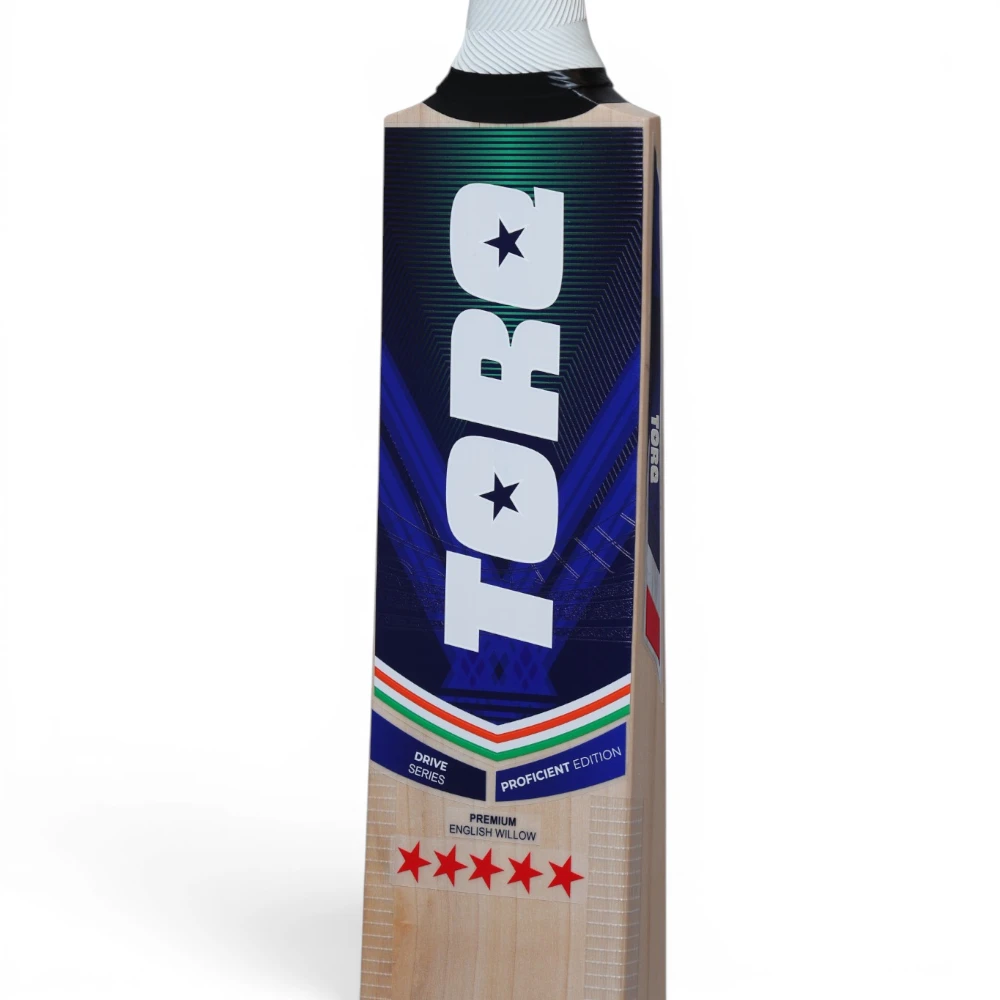
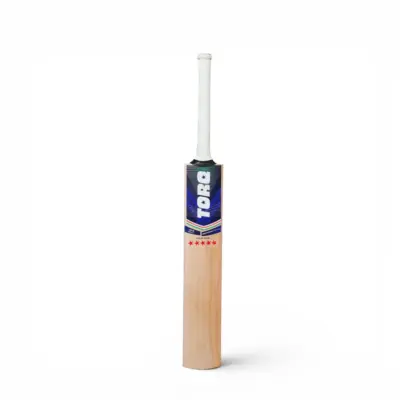
The TORQ Edge: Maximizing your boundary-clearing potential requires combining precise mechanical drills with a beautifully balanced, custom-pressed cricket bat.
Introduction
Walk into any modern T20 stadium during the opening overs, and you will immediately feel the palpable tension in the air. Typically, an opening batsman stands at the crease, eyeing the field restrictions, knowing that clear gaps exist if they can only generate enough force to fly over the inner ring. For decades, traditional coaching emphasized pristine defensive blocks and textbook drives along the carpet early in an innings.
As a result of the T20 revolution, however, that conservative philosophy has been completely turned on its head. In the modern era, a slow start in the powerplay is a costly mistake that directly suffocates a team’s scorecard. Indeed, if you cannot exploit those initial six overs with high-octane boundary hitting, you are letting the opposition dictate the game.
Consequently, to transform yourself into a genuine powerplay weapon, you must look beyond basic net practice. To separate the tentative pushers from the elite ball-strikers, you need to deliberately train your body for maximum kinetic velocity. Here are 5 scientifically backed drills designed to rapidly increase your bat speed and power when the fielders are up.
The Mechanics of Explosive Power: It’s Not Just Muscle
Before we dive into the specific training routines, we must first dismantle a common cricketing myth. Despite what many casual observers believe, brute physical size does not automatically translate into a high boundary percentage.
In reality, power hitting is a byproduct of rotational physics and kinetic sequencing. Biochemically speaking, your body acts as a whip. Energy is first generated by pushing forces from your back foot against the turf. Subsequently, this energy travels upward through your hips, transfers across your torso, and accelerates out through your shoulders, arms, and finally, the blade of your bat.
Therefore, if your sequence is poorly timed, the energy leaks out before impact, leaving your shots looking entirely dead. Conversely, when your kinetic chain fires in perfect harmony, even a lightweight player can send a new white leather ball skyrocketing over the stadium roof.
5 Drills to Ignite Your Powerplay Performance
1. The Overload/Underload Bat Speed Drill
To begin with, you must condition your fast-twitch muscle fibers to fire at an elevated velocity. This drill utilizes the classic sports science principle of contrast loading.
The Setup: You will need your standard match bat, a weighted training bat (overload), and a specialized lightweight bat or a simple tracking stick (underload).
The Process: First, take 10 full-intensity shadow swings using the weighted bat to engage and fatigue the core stabilizing muscles. Immediately afterward, pick up the lightweight stick and execute 10 rapid swings, focusing purely on maximum hand speed. Finally, pick up your standard TORQ match bat and complete 10 swings.
The Result: Because your nervous system was tricked by the heavy implement, your match bat will suddenly feel weightless. Consequently, your hands will naturally accelerate through the hitting zone at a significantly higher RPM.
2. The Bottom-Hand Isolation Tee Drill
On one hand, traditional cricket relies heavily on a dominant top hand for direction and control. On the other hand, explosive powerplay lofted shots require a fierce, snap-release from the bottom hand to create a trampoline effect at impact.
The Setup: Place a batting tee roughly two feet in front of your stance, aligned with your ideal hitting arc for a mid-on lofted drive.
The Process: Remove your top hand entirely from the handle, gripping the bat solely with your bottom hand. From a stationary stance, lift the blade and swing forcefully through the ball on the tee, completing a full chest-facing follow-through.
The Result: This isolation forces your forearm and wrist to handle the full load of the swing path. As a consequence, you eliminate any passive dragging from the top hand, establishing a cleaner, punchier contact point.
3. The Step-Into-Impact Momentum Drill
In the powerplay, static batsmen are easy targets for tactical bowling variations. Therefore, learning to generate linear momentum before launching into a rotational swing is highly beneficial.
The Setup: Have a coach or partner stand approximately 10 yards away with a bucket of high-density drop balls or soft training balls.
The Process: Start two paces behind your normal batting crease. As the feeder drops or gently tosses the ball into the hitting zone, actively step forward with your back foot first, followed by your front foot, creating a walking momentum into the shot. Without stopping, swing through the line of the ball with maximum force.
The Result: This drill forces an immediate weight transfer from back to front. Crucially, it teaches your brain how to convert forward kinetic energy into raw, explosive horizontal bat speed.
4. Medicine Ball Rotational Throws
Undeniably, your core musculature is the ultimate bridge between your lower-body drive and your upper-body release. If your torso cannot rotate dynamically, your swing velocity will plateau.
The Setup: Stand sideways next to a solid brick wall, holding a 3kg to 5kg medicine ball in both hands near your back hip, mirroring your batting stance.
The Process: Sink into your back leg to load your glutes. Then, mimicking the exact hip-turn of a pull shot, explosively launch your hips forward and hurl the medicine ball horizontally into the wall. Catch it on the rebound and repeat for 3 sets of 8 reps.
The Result: By training against a heavier resistance than a cricket bat, you build immense explosive power in your obliques and hips. Subsequently, when you return to the crease, your capability to whip your hips open on short deliveries will feel incredibly fast.
5. The Distracted Release Throw-Downs
Ultimately, great bat speed is useless if you commit to the shot too early and lose your structural shape. This drill refines your ability to delay the downswing until the absolute last millisecond.
The Setup: A coach or partner stands behind a bowling screen or at a shortened distance of 14 yards, armed with a sidearm cricket ball thrower.
The Process: The feeder will mix up their delivery speeds unpredictably—alternating between rapid under-cutters and slower, loopy change-ups. You must maintain your standard backlift shape and intentionally hold your hands high, only releasing the downswing once the ball’s trajectory is firmly judged.
The Result: Instead of rushing your swing and checking your shots, you train your body to remain loose until the moment of truth. Meanwhile, your hands learn to accelerate with short, violent bursts from a perfectly stable base.
The Crucial Interplay: Bat Profile & Power
While mechanical proficiency is undeniably the foundation of power, the hardware in your hands acts as the ultimate amplifier. A bat that is poorly balanced or over-pressed will absorb your physical energy and leave your shots falling short of the boundary ropes. For example, a wide-grained cleft pressed meticulously for a mid-to-low sweet spot provides the ideal elastic kickback for horizontal bat shots. Therefore, ensuring your gear is customized to match your fast-twitch swing style is just as critical as the hours logged in the training nets.
“In our performance testing, we see countless players trying to muscle the ball by tensing their shoulders, which actually slows the bat down. The secret to powerplay dominance is relaxed hands followed by an explosive, sequential release of the hips. When you pair that fluid, whipped mechanic with a bat engineered for an ultra-light pickup, the boundary ropes instantly feel twenty yards closer.”
– Yugendra Banarjee, High-Performance Coach, Kolkata
Conclusion
In conclusion, turning yourself into a dominant powerplay batsman requires stripping away old habits of tentative positioning. Do not let yourself become a passive anchor at the top of the order when the field restrictions are practically begging to be exploited. Conversely, do not simply swing blindly with tense arms and hope for a lucky edge.
Ultimately, elite bat speed is a harmonious marriage of sports science, rigorous physical drilling, and intuitive timing. So, instead of merely practicing defensive blocks, prioritize how your kinetic chain fires, analyze your hip rotation, and demand a dynamic, explosive downswing. After all, when you are staring down a premier opening bowler searching for early swing, it is the lightning-fast velocity of your hands—not your textbook aesthetics—that will clear the inner ring and set the tone for the entire match.
FAQs
Generally, no. While a heavier blade carries more mass, force is calculated as mass multiplied by acceleration. If a bat is too heavy for your current forearm strength, your bat speed will plummet drastically, resulting in a weaker impact. Therefore, it is always better to choose a bat that offers a lighter, feather-like pickup so you can maximize your swing velocity.
To see a profound structural change in your fast-twitch muscle fibers, you should integrate these routines 2 to 3 times per week during your training cycle. Specifically, overload/underload tracking and medicine ball throws are highly effective when performed as part of a structured pre-season routine or during mid-week technical blocks.
Yes, but with reasonable modifications. For instance, younger players should avoid heavy medicine balls; instead, they should focus primarily on the bottom-hand isolation drill and lightweight stick shadow swings. Building proper kinetic sequencing early prevents them from developing injury-prone mechanical flaws later in their careers.
Typically, an overly tight grip creates intense tension that travels up your forearms into your shoulders, which severely stiffens your entire swing arc. To resolve this, you should hold the handle lightly—similar to holding a bird—and only squeeze firmly at the exact fraction of a second before the blade meets the leather.
To evaluate this at home, you can easily use a smartphone camera to record your shadow swings from a side-on profile at 240 FPS (slow motion). Subsequently, by counting the individual frames from the start of your downswing to the point of imaginary impact, you can calculate your acceleration relative to your baseline video clips.