Key Takeaways
The Critical Touchpoint: Your bat grip is the only direct point of physical contact between you and your blade, making it the foundation of control, shock absorption, and blade alignment.
The Lifetime Metric: For optimal traction, active club cricketers should change their grips every 4 to 6 weeks, or immediately once the surface becomes smooth or glossy.
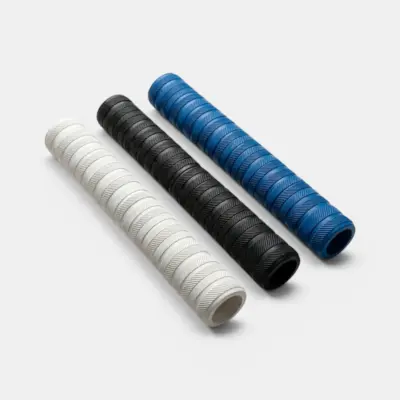
Pattern Mapping: Choosing the right pattern is a gameplay strategy. Chevron patterns favor explosive power-hitting styles, scale or octopus designs offer precision for touch players, and hybrid matrices give you the best of both worlds.
The Physics of Pickup: Adding a second grip increases total weight slightly, but it acts as a counter-balance that noticeably lightens your bat’s perceived pickup.
Introduction
Walk into any high-end cricket academy, and you will see the exact same ritual. A player approaches a wall of pristine English willow, pulls a blade from the shelf, and meticulously counts the grains. For decades, cricket culture has taught us to focus entirely on the wood itself. We obsess over custom pressing, grain straightness, and sweet spot placement. Yet, we completely ignore the single most critical interface of the entire weapon: the cricket bat grip.
Let’s look at this realistically. In an era of explosive T20 cricket, lightning-fast hand speed, and aggressive boundary clearing, playing with a worn-out, generic, or poorly chosen grip is a massive competitive disadvantage. If you pair an elite piece of custom-pressed willow with a slippery, basic rubber handle, you are capping your performance. To help you unlock your full potential at the crease, here is the breakdown on how to choose, optimize, and maintain the perfect bat grip.
The Core Content: Choosing, Matching, and Maintaining Your Grip
Why Your Grip Dictates Your Timing and Shot Control
Biochemically speaking, your hands dictate the angle of the bat face at the precise millisecond of impact. A common misconception is that batting power comes strictly from raw forearm strength. In reality, clean timing is an extension of friction.
If your hands slip even a millimeter during a high-velocity cover drive, the bat face twists out of alignment. A fresh, high-performance grip locks your gloves into position, allowing for seamless vibration dissipation up the spine of the handle. To achieve maximum energy transfer into the ball, you must match your high-quality willow with an equally premium, high-traction interface.
Decoding Grip Patterns: Which Style Suits Your Game?
Selecting a new grip isn’t just about matching your team colors; it is a tactical choice between thickness, cushioning, and fingertip traction.
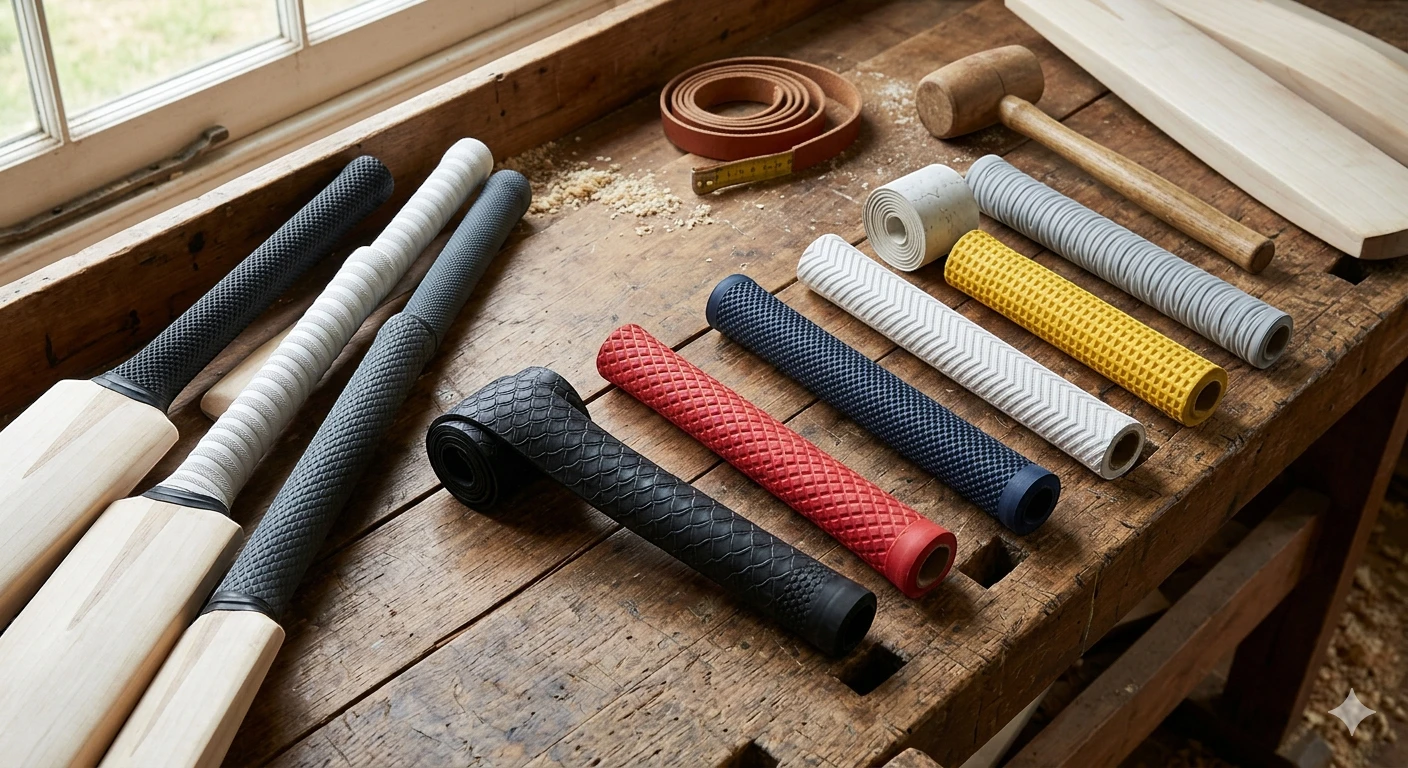
1. The Scale / Octopus Grip (Engineered for Touch and Control)
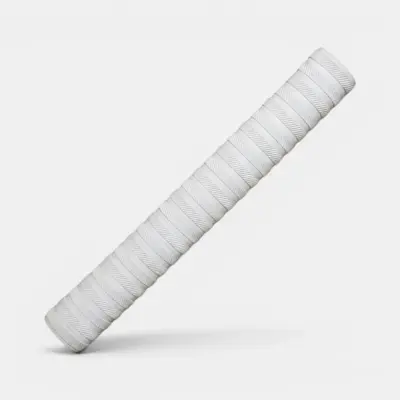
Grips featuring a scale or circular “octopus” texture are carved with tiny, tightly packed multi-directional ridges.
The Feel: This design creates a distinctly firm, highly tactile surface against the palms of your batting gloves.
The Style: Because it offers immense friction, it requires less squeezing pressure from your hands. This makes it an ideal choice for elegant, top-hand dominant players who rely on late cuts, deflections, and pristine placement.
The Downside: The fine scales can wear down faster in high-friction areas, such as where the thumb and index finger web press against the handle.
2. The Chevron / Diamond Grip (Engineered for Power Hitting)
Conversely, grips with deep geometric chevron or diamond patterns feature wider, interlocking grooves.
The Feel: This structural design offers excellent natural elasticity and deep channel tracks for sweat drainage.
The Style: The interlocking grooves excel at resisting high-torque twisting. If you are a bottom-hand dominant T20 player who loves to clear the boundary ropes, the chevron pattern absorbs the heavy impact forces effortlessly.
The Downside: Chevron grips are inherently thicker. They can bulk up the handle feel, which may slightly alter your natural pickup if you prefer a traditional, ultra-thin round handle.
3. The Matrix / Hybrid Grip (The Modern All-Rounder)
The hybrid matrix grip features a smooth chevron pattern on the top half and a high-traction scale pattern on the lower half. This configuration perfectly mirrors the anatomy of a textbook stance—giving your dominant top hand absolute precision control while allowing your bottom hand to apply explosive, unhindered power.
The Lifespan: How Often Should You Change Your Grip?
While your bat’s willow requires disciplined oiling and knocking-in to preserve its lifespan, your grip requires routine replacement to protect your timing.
Professional players often change their grips every 3 to 4 weeks of heavy net use. For active club cricketers and academy students, the optimal sweet spot is every 4 to 6 weeks, or at the absolute minimum, at the turn of a new season.
Do not wait for the rubber to physically tear. You should replace your grip immediately if you notice any of these warning signs:
The Shine: The rubber loses its matte, powdery texture and takes on a glossy, slick appearance.
The “Ride Up”: The grip begins to uncoil, bunch up, or slide up the handle toward the twine binding, which completely ruins the balance of your pickup.
Dry Rot: The rubber feels stiff, brittle, or shows tiny surface cracks when slightly stretched.
Thickness and Balance: Single vs. Double Gripping
The Single Grip Setup: This provides the most direct feedback from the blade. If you like a lightweight, crisp pickup and want to feel exactly where the ball hits the face, stick to a single premium grip.
The Double Grip Setup: To fix a bat that feels slightly bottom-heavy, many players roll on a second grip. By adding roughly 40 to 50 grams of rubber completely above the hands, you create a counter-weight effect. This shifts the balance point higher up the spine, making the entire blade feel lighter through your swing path while heavily dampening hand sting against fast bowling.
“Many players spend a fortune tracking down the perfect grade of willow, only to let a six-month-old, sweat-slicked grip completely ruin their hand speed. Your hands are your only steerage over the blade. A fresh, properly patterned grip isn’t a cosmetic accessory, it is a functional performance upgrade that directly impacts your control and confidence at the crease.”
- Tanveir Singh, Cricket Coach, USA
Conclusion
Ultimately, a high-performance cricket bat is an investment in your game, and protecting that investment means paying attention to the details. The grip on your handle is the ultimate translator of your intent; it converts your physical power and hand speed into clean, middle-of-the-bat timing.
Whether you opt for the precision of a scale pattern, the rugged torque-resistance of a chevron design, or the calculated balance of a double-grip setup, don’t let a worn-out piece of rubber compromise your hard work in the nets. Refresh your grip regularly, find the pattern that matches your batting profile, and step up to the crease with absolute security in your hands.
While adding a second rubber grip technically increases the scale weight of the bat by roughly 40 to 50 grams, it actually alters the physics of the balance point. Because this extra weight is placed entirely at the handle (above your hands), it acts as a counter-balance. As a result, it makes the bat’s pickup feel lighter and smoother during your swing path.
To a small degree, yes. If your grip is simply coated in surface dirt or pitch dust, wiping it down with a damp microfibre cloth and a tiny drop of dish soap can clear out the grooves. However, if the rubber has become smooth and shiny from sweat acidity and UV exposure, the compound has degraded permanently. Washing will not bring back its natural elasticity, and it needs to be replaced.
Trying to pull or force a rubber grip down the handle manually usually results in a frustrating tear. The easiest and most efficient method is using a specialized wooden grip cone. You roll the new grip entirely onto the wide end of the cone, place the hollow base over the top of your bat’s handle, and smoothly roll the rubber down over the twine binding for a perfect, uniform fit.
If the bottom section of your grip is wearing smooth or shredding prematurely, it is a clear technical indicator that you are using a “hard-handed” batting style. In a textbook cricket stroke, your top hand should maintain about 80% of the structural control, while the bottom hand acts purely as a guiding trigger. Overtightening your bottom hand grip causes excessive friction against the rubber during your swing.
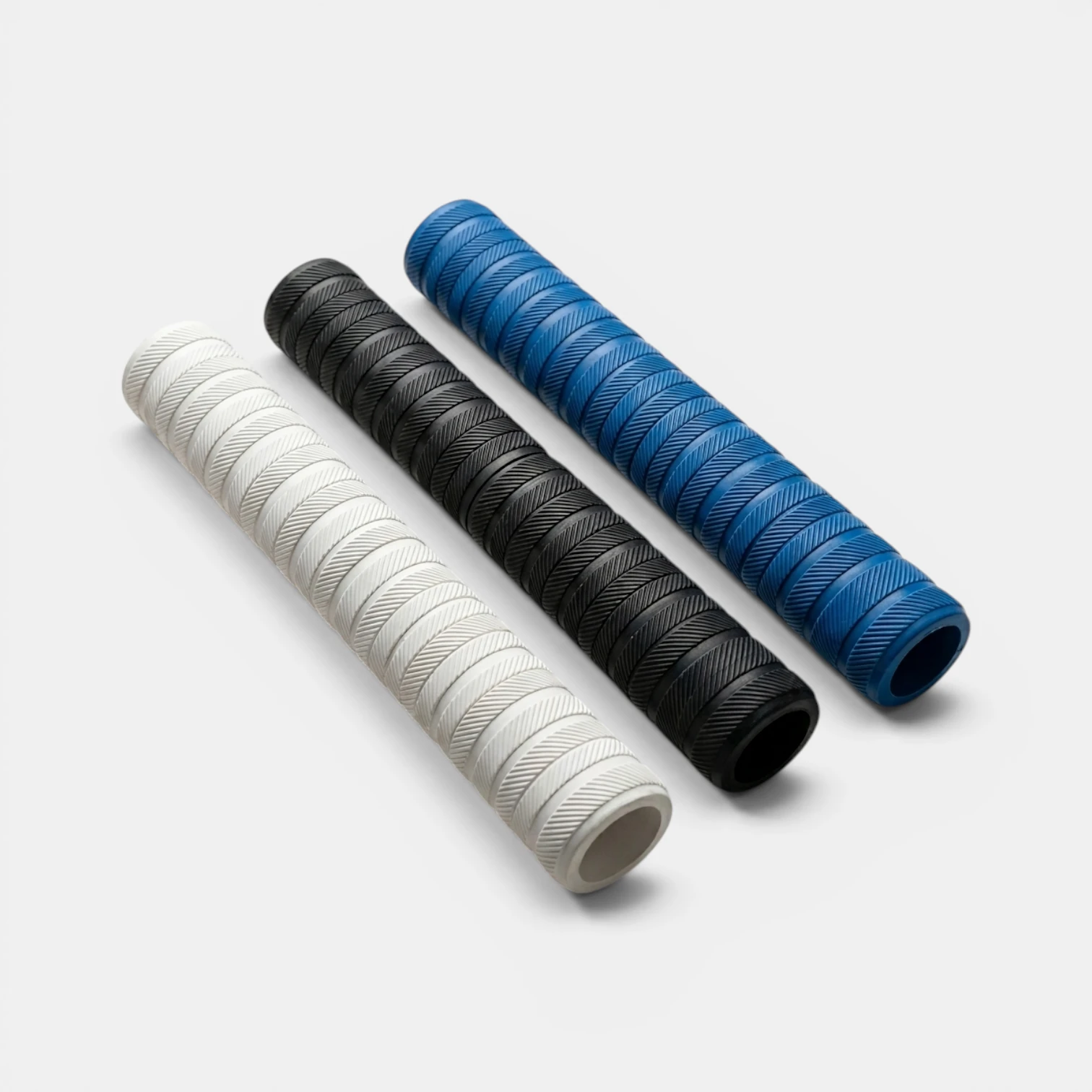
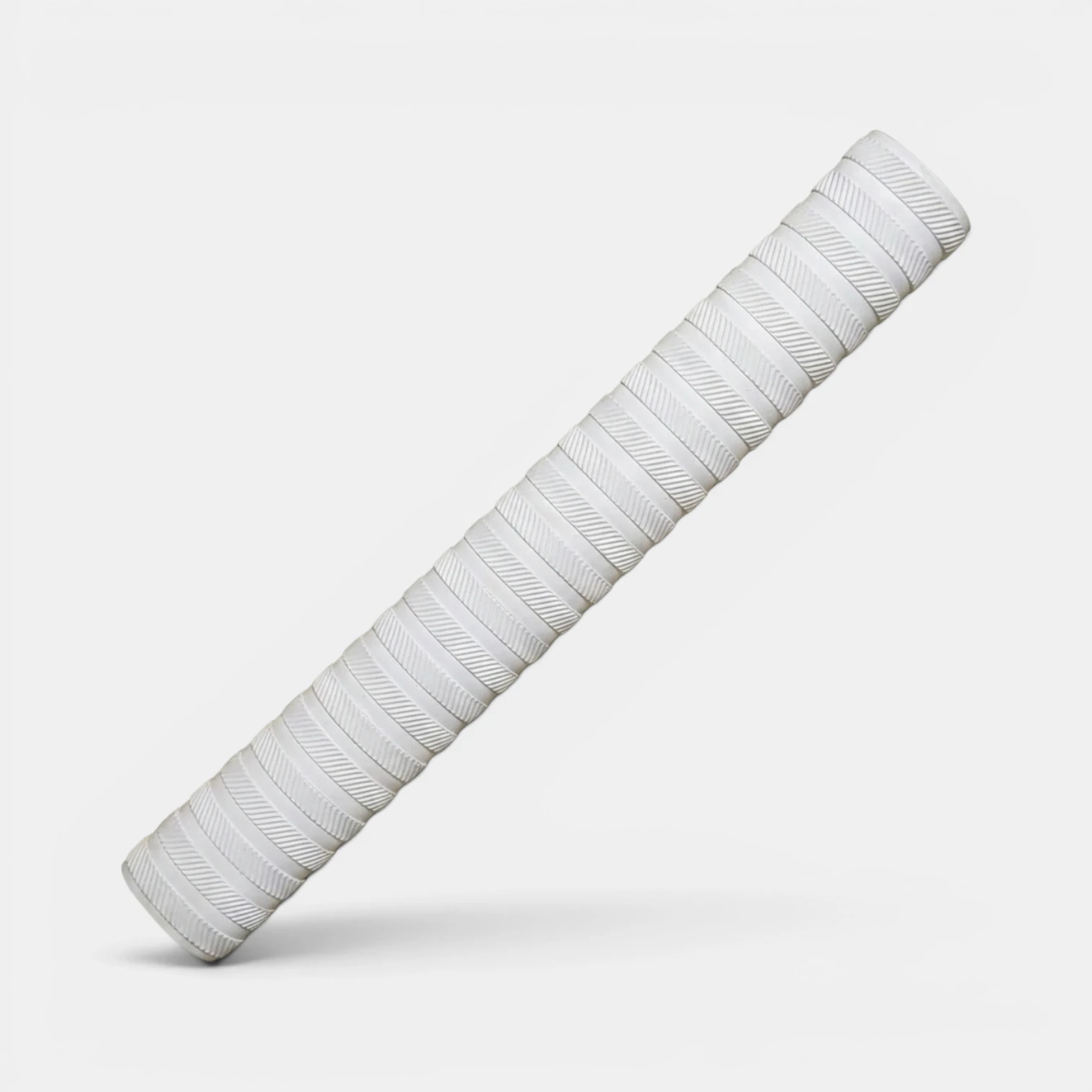
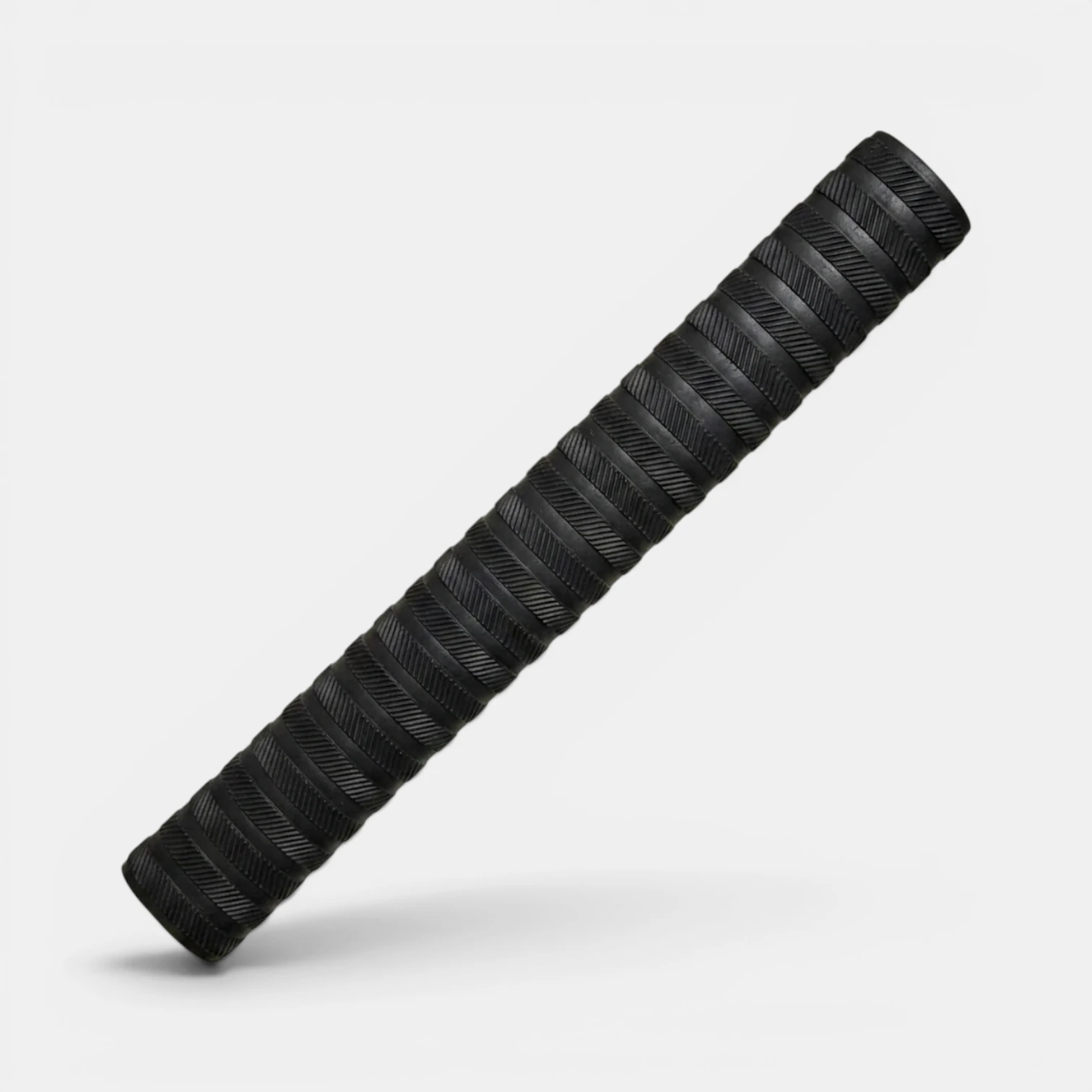
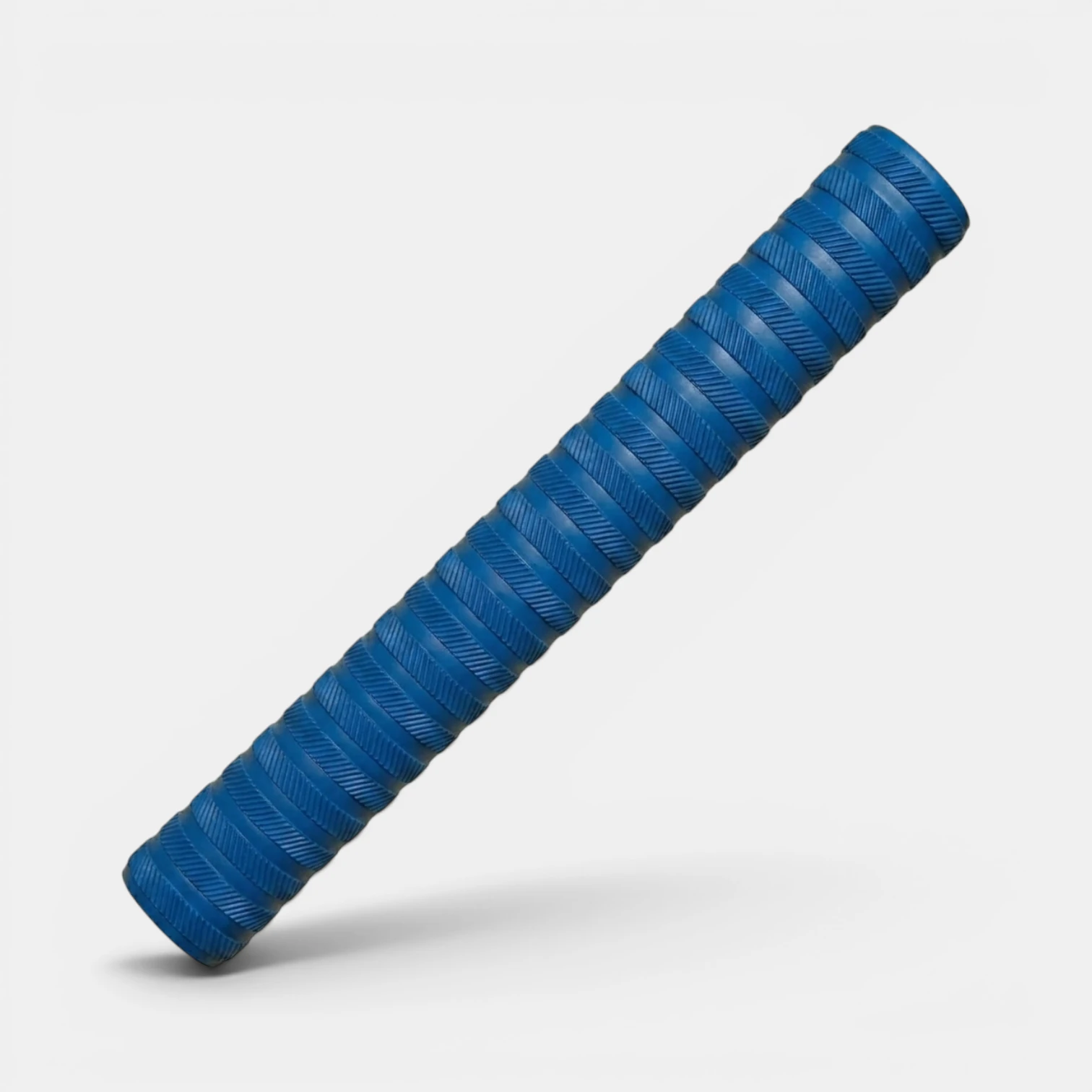
1500 in stock (can be backordered)
Torq Premium Cricket Bat Grip
₹120.00 – ₹1,200.00
₹116.00 – ₹900.00
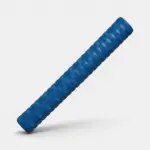
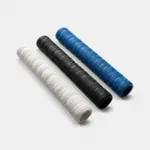
The Torq Cricket Bat Grip is meticulously crafted for batsmen who demand elite handling, absolute precision, and professional-grade comfort throughout long innings.